Everyday life
Zepbound and birth control pills: the 4-week rule
The Zepbound label asks people on oral hormonal contraceptives to switch to a non-oral method, or add a barrier method, for 4 weeks after starting Zepbound and for 4 weeks after each dose increase. Contraceptives that are not taken by mouth should not be affected.
The Oolite team, from the FDA labels
Sources checked Oct 27, 2026
Published Nov 12, 2026
Updated Oct 27, 2026 · 2 min read
The short answer
The Zepbound label asks people on oral hormonal contraceptives to switch to a non-oral method, or add a barrier method, for 4 weeks after starting Zepbound and for 4 weeks after each dose increase. Contraceptives that are not taken by mouth should not be affected.
What the label says
The rule appears in the section on people who can become pregnant (§8.3), with its reason:
From the labelUse of ZEPBOUND may reduce the efficacy of oral hormonal contraceptives due to delayed gastric emptying. This delay is largest after the first dose and diminishes over time. Advise patients using oral hormonal contraceptives to switch to a non-oral contraceptive method, or add a barrier method of contraception for 4 weeks after initiation with ZEPBOUND and for 4 weeks after each dose escalation
The drug interactions section (§7.2) adds who it does not concern:
From the labelHormonal contraceptives that are not administered orally should not be affected
The Medication Guide says it in plain words:
From the labelBirth control pills by mouth may not work as well while using ZEPBOUND. If you take birth control pills by mouth, your healthcare provider may recommend another type of birth control for 4 weeks after you start ZEPBOUND and for 4 weeks after each increase in your dose of ZEPBOUND.
Why the stomach matters here
A pill taken by mouth has to leave the stomach before it is absorbed. The pharmacology section (§12.2) describes what Zepbound does to that:
From the labelTirzepatide delays gastric emptying. The delay is largest after the first dose and this effect diminishes over time.
The label measured it on a combined birth control pill. Taken with a single 5 mg dose of tirzepatide, the peak levels of its hormones were 55 to 66 percent lower and the overall amount absorbed 20 to 23 percent lower, with the peak arriving 2.5 to 4.5 hours later. That is the reason for a second method while the effect is strongest.
When the windows open
The shot starts at 2.5 mg once weekly for 4 weeks, then moves to 5 mg. After that, the label allows increases of 2.5 mg after at least 4 weeks on the current dose, up to 15 mg:
From the labelAfter 4 weeks, increase the dosage to 5 mg injected subcutaneously once weekly. The dosage may be increased in 2.5 mg increments, after at least 4 weeks on the current dose
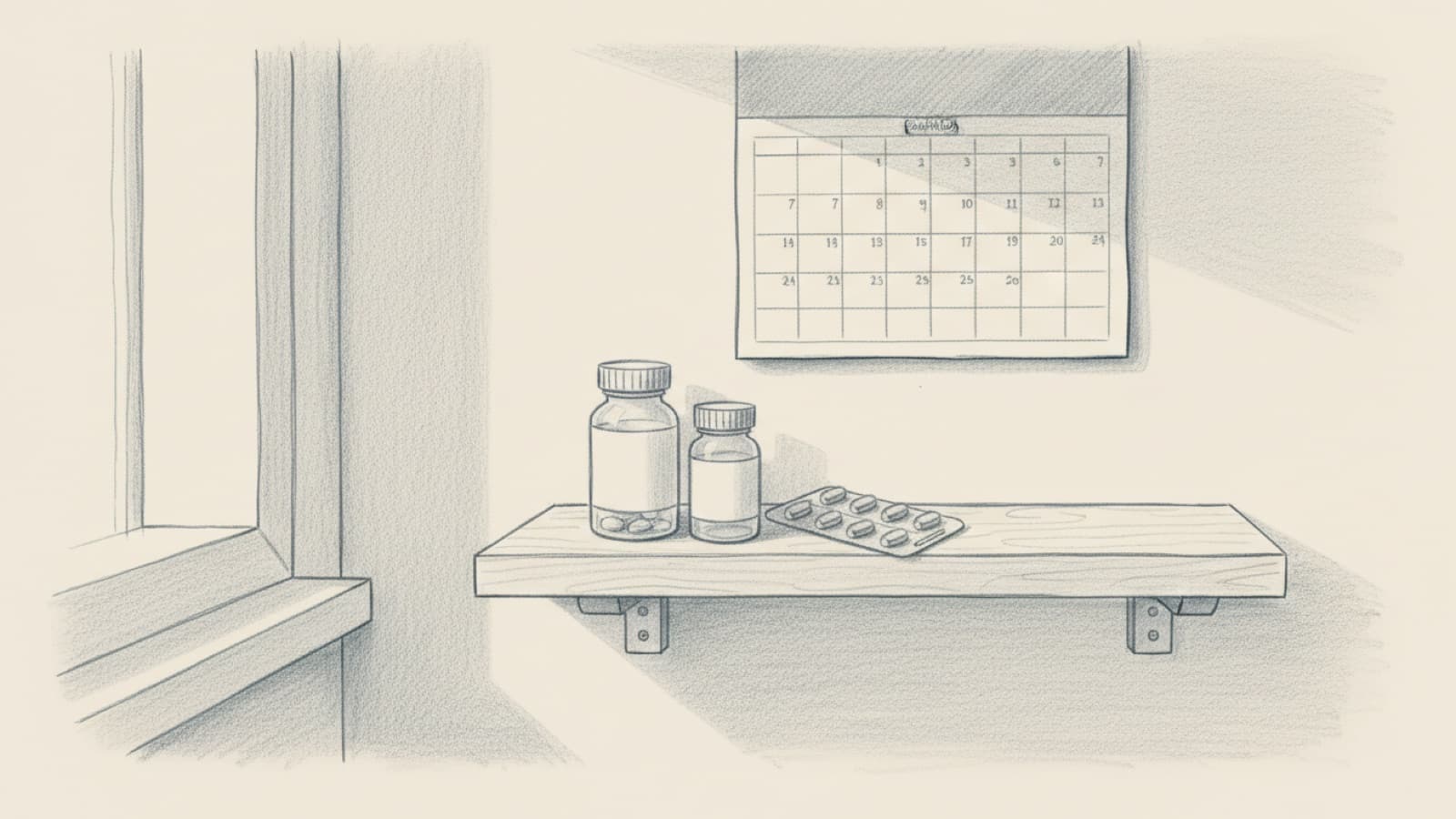
So the 4 week window lines up with the escalation itself: each new dose opens one, and it closes about when the next step becomes possible. Which method to switch to, or which barrier to add, is for your healthcare provider to advise.
Oolite's shot log keeps the date of each dose change, so the start of every 4 week window is written down, and the report for your prescriber shows the steps in order.
Questions people ask
Does the rule apply to a patch, a ring, an IUD, an implant or a shot?
The label's rule is about oral hormonal contraceptives. It says hormonal contraceptives that are not administered orally should not be affected. Which method fits you is a conversation with your healthcare provider.
Why is it only for 4 weeks at a time?
Because the cause is the way Zepbound slows the emptying of the stomach, and the label says that delay is largest after the first dose and diminishes over time. Each dose increase brings a new window.
How many windows are there?
One after the first shot, then one after each increase. The label starts at 2.5 mg for 4 weeks, moves to 5 mg, and allows steps of 2.5 mg after at least 4 weeks, up to a maximum of 15 mg. The number of windows depends on how many steps your prescriber chooses.
Do I need the backup method on a stable dose?
The label asks for it for 4 weeks after starting and for 4 weeks after each dose escalation. Between those windows, on a dose that does not change, it asks nothing extra.
Sources
- Zepbound prescribing information, Eli Lilly, Highlights, §2.1, §2.2, §7.2, §8.3, §12.2 and §12.3, revised 8/2026 · Switch to a non-oral contraceptive method or add a barrier method for 4 weeks after initiation and for 4 weeks after each dose escalation; non-oral hormonal contraceptives should not be affected; gastric emptying delay largest after the first dose; combined oral contraceptive Cmax reduced by 59, 66 and 55 percent and AUC by 20, 21 and 23 percent after a single 5 mg dose; escalation from 2.5 mg in 2.5 mg steps after at least 4 weeks, maximum 15 mg.
- Zepbound Medication Guide, Eli Lilly, ZEP-0010-MG-20260828 · Birth control pills by mouth may not work as well; another type of birth control for 4 weeks after starting and after each dose increase.
Sources checked Oct 27, 2026. This page is information, not medical advice: read the medical disclaimer, and talk to your prescriber or pharmacist about your own treatment.
Written by
The Oolite team, from the FDA labels
We make Oolite. Every answer starts from the FDA prescribing information, quoted word for word, and is rewritten when a label changes.
How these pages are madeOolite
The GLP-1 tracker for the pill and the shot.
The 30 minute timer, your shot day, the level chart and the dose reminder, on iPhone, with Apple Watch to log. Free to download, then a 14-day free trial.